

Finding Peace with Imperfect Progress
When striving for 'tomorrow' costs us today

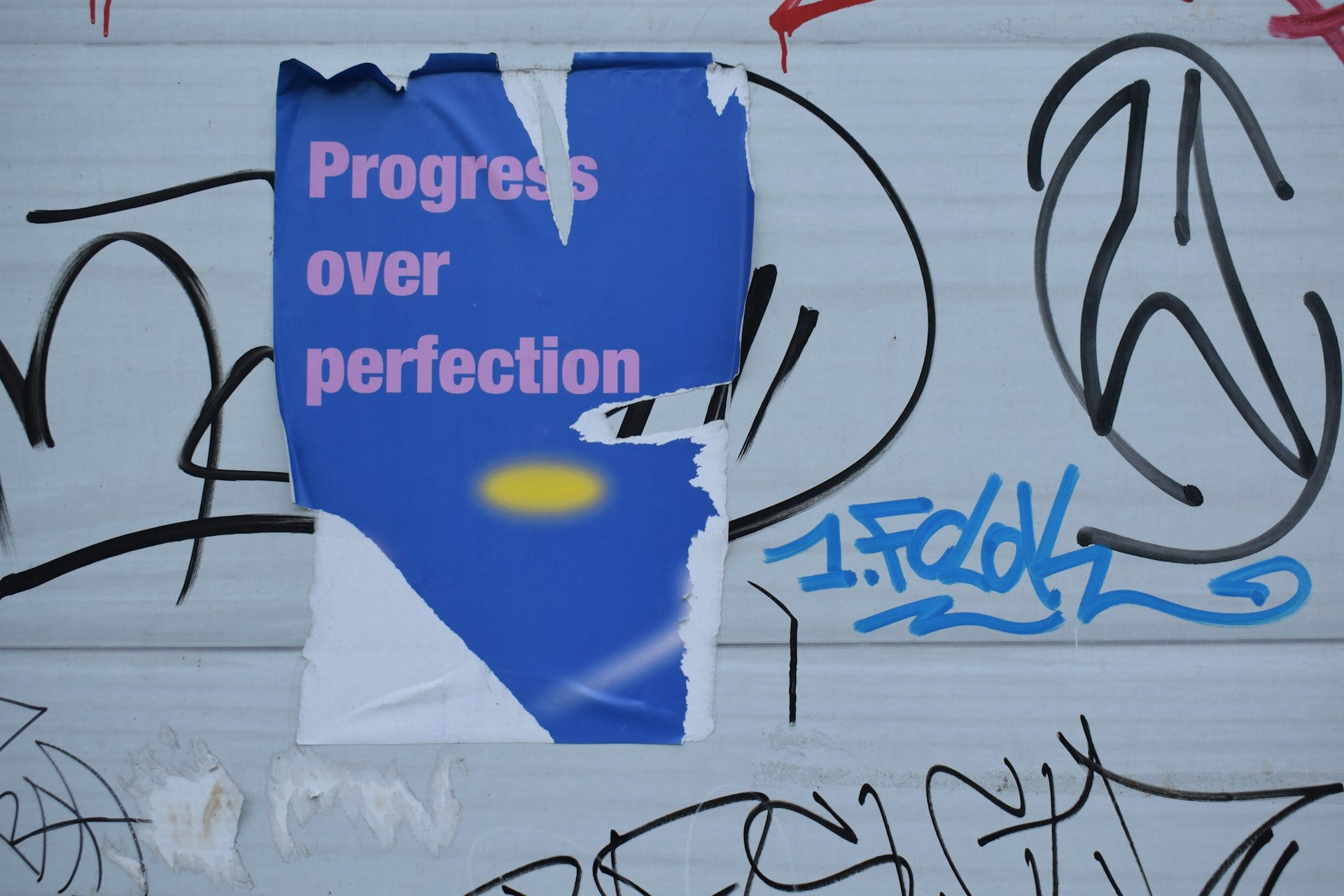
We're told life is short, so we must maximize every moment. But in our desperate rush to create perfect futures, we miss the very life we're trying to optimize.
I know this pattern intimately. For years, I packed my evenings with side projects and business plans, telling myself I was "investing in the future." Really, I was just missing the present - genuine conversations, basic and simple requests from my wife, and simple moments of joy.
The hard truth? We think sacrificing today will somehow lead to a perfect tomorrow. But that tomorrow never arrives. We just keep moving the goalposts, creating new standards of "perfect" to chase.
The Cost of Future-Focus
Take my high school years. I transferred schools chasing "better opportunities." But in pursuing those idealized futures, I lost what mattered most - athletics, genuine friendships, and the simple joy of being present in my teenage years. The pattern followed me into adulthood:
Filling every moment with tasks and goals
Believing productivity equals progress
Deteriorating relationships from emotional disconnection
Missing life's small but meaningful moments
The pattern was clear: in pursuit of perfect future outcomes, I was sacrificing real, meaningful present moments.
The Perfectionism Spiral
Towards the end of a personal development project I had to write up some documentation. Here, I realized I fell into a familiar trap. I would work on a draft for documentation on APIs with Python. I’d draft and redraft content until they felt “just right.” This has occurred with other documentation and many would never be sent or completed at all.
Spilling into my personal life, many texts and birthday cards would go unsent, coffee dates went unscheduled, all of which were waiting for some mythical perfect moment that never arrived.
"We are not given a short life but we make it short," wrote Seneca, "and we are not ill-supplied but wasteful of it."
Perfectionism creates a toxic cycle:
We tie our self-worth to flawless execution
We endlessly tinker, afraid to release "imperfect" work
We miss opportunities waiting for the "perfect moment"
We damage relationships holding out for the "right words"
We burn out from constant striving
Breaking Free: Imperfect Action
What changed for me? Having a child forced me to confront this pattern. You can't be "future-focused" with a baby. They need you now, in this moment.
The irony? When I finally stopped obsessing over perfection, I started:
Enjoying my work more
Deepening my relationships
Feeling more alive and present
Making actual progress through imperfect action
As Oliver Burkeman notes: "Moving forward at 70% takes more guts than holding out for 100%, because it entails moving forward amid uncertainty."
My daughter's journey with hip dysplasia surgery became my greatest teacher in embracing imperfect progress. At eighteen months old, she faced a challenge that would humble any adult - learning to walk all over again. After months in a cast and then a brace, her first steps post-recovery weren't the confident strides of before. They were wobbly, uncertain, sometimes accompanied by falls and frustration.
But here's what struck me: she never waited for the perfect moment to try again. Each morning, she'd wake up ready to go, her determination unmarred by yesterday's stumbles. Her walk today still shows traces of stiffness, but her joy in movement and being hasn't diminished. She's not waiting for perfect mobility to live fully - she's dancing, climbing, and exploring with whatever capacity she has right now.
This lesson followed me to work, where I faced a mountain of service tickets and project deadlines. My instinct was to craft perfect solutions for each issue, to create flawless documentation, to leave no stone unturned. But watching my daughter taught me something vital: progress doesn't require perfection.
Now, when I open my ticket queue and see hundreds of tasks demanding attention, I think of her determined little steps. Instead of freezing under the pressure of perfect execution, I've learned to prioritize effectively. Critical security updates take precedence over optional enhancements. Customer-facing issues get addressed before internal optimizations. Each task gets my best effort within reasonable time constraints, then I move forward.
This approach has transformed my productivity. Rather than spending three days perfecting a single solution, I resolve multiple high-priority issues effectively. Are these solutions perfect? No. But they're solid, practical, and most importantly, they're done. Like my daughter's improving gait, each implementation creates a foundation for future enhancements.
The parallel extends to my documentation work. Previously, I'd agonize over any documentation, drafting and redrafting until each word felt perfect. Now I focus on clarity and completeness over perfection. A well-structured, clear document that helps my colleagues today is better than a masterpiece that's perpetually "almost ready."
Finding Balance: Present Focus with Future Vision
Does this mean abandoning goals and ambitions? Not at all. It means pursuing them while staying grounded in the present. Some key realizations:
"Good enough" is actually good enough
Being present isn't lazy - it's essential
Perfection steals joy from today
Achievement without presence is hollow
Imperfection showcases our humanity
I still set goals and work hard, but I’ve learned to embrace the messy middle.
Moving Forward
The cost of future-focus isn't just measured in missed deadlines or delayed projects - it's calculated in rushed relationship time and moments of joy postponed indefinitely. I know because I've paid that price, chasing the mirage of hustle culture's perfect tomorrow.
I've learned: “life isn't short - we make it feel short by living for tomorrow”. Another Seneca quote. When I transferred schools chasing "better opportunities," I lost precious time with family and abandoned my athletic pursuits. Today, I recognize that same pattern trying to emerge in new forms - in the temptation to work through evenings, in the urge to perfect a program or workflow instead of being present for family evening routine.
The difference now? I can choose differently. Each time I close my laptop at 6 PM, each time I submit work that's good enough rather than endlessly polished, I'm reclaiming the present moment. These are victories over the perfectionism that once consumed my days.
For those caught in the same cycle, start by asking yourself:
What present moments am I sacrificing for future perfection?
Where can I embrace "good enough" to move forward? Identify one area.
How can I pursue goals while staying grounded in today? Find small ways to do so.
The future will always be there to shape. But the present - this moment, this conversation, this opportunity to connect or create or simply be - that's where life actually happens. Make it count, imperfections and all.
This post was influenced by two posts: Good is good enough by Hello, Adversity and another shared by Chris titled Actually, there's more than enough time for everything that matters by Hello, Mortal shared by Hello, Adversity.